Ronnie Pickering: The Man, The Meme, and the Moment That Took Over the Internet

Who Is Ronnie Pickering?
Ronnie Pickering If you have spent any time on the internet over the past decade, you have probably heard someone shout, “Do you know who I am?” followed by the emphatic reply: “Ronnie Pickering!” The name became a punchline almost overnight, transforming an ordinary man from Hull into an unlikely global internet sensation. But who is Ronnie Pickering beyond the meme?
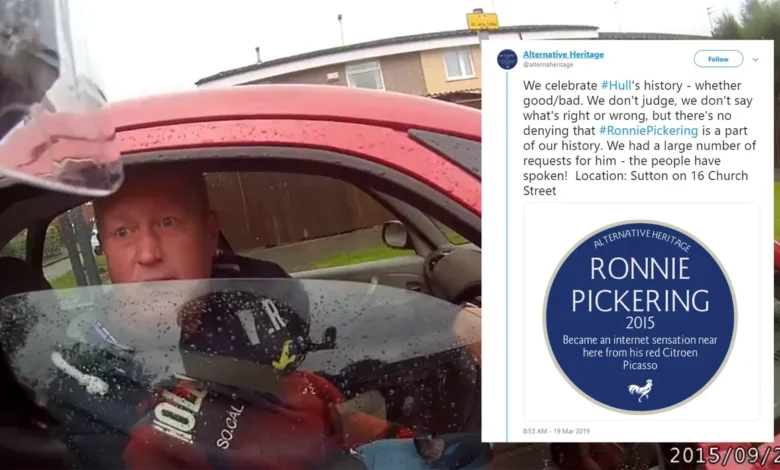
Ronnie Pickering is a British man from Kingston upon Hull, England, who became famous after a road rage incident was captured on video and uploaded online in 2015. The clip shows him aggressively confronting a motorcyclist, repeatedly insisting the rider recognize him. The rider’s calm and confused response—“Who are you?”—turned what could have been a forgettable altercation into a viral masterpiece of awkward comedy.
Before the incident, Pickering was virtually unknown outside his local community. He had reportedly worked as a plasterer and lived a relatively ordinary life. There was nothing to suggest that his name would one day echo across social media platforms worldwide. His sudden notoriety highlights how unpredictable viral fame can be in the digital age.
What makes Ronnie Pickering particularly fascinating is not just the incident itself, but how quickly the internet transformed him from a local personality into a global meme. His name became shorthand for misplaced self-importance, and the phrase “Ronnie Pickering!” entered the online lexicon as a humorous way to mock inflated egos.
The Road Rage Incident That Sparked It All
The incident took place in Hull, when a helmet-mounted camera worn by a motorcyclist recorded an argument at a traffic junction. Ronnie Pickering, driving a small car, confronted the rider after what he believed was a slight on the road. The exchange escalated quickly, with Pickering demanding recognition and asserting his identity in a way that seemed both aggressive and strangely theatrical.
The now-iconic moment occurs when he shouts his name as though it should immediately command respect. Instead, the motorcyclist repeatedly asks, “Who’s that?” and “Who are you?” The contrast between Pickering’s expectation of fame and the rider’s genuine confusion created a perfect storm of comedic timing.
Within days of being uploaded, the video went viral. It was shared across Facebook, YouTube, Twitter, and Reddit, amassing millions of views. Viewers around the world found humor in the absurdity of the situation. The repetition of his name became instantly quotable, and countless parody videos soon followed.
The clip also sparked conversations about road rage and public behavior. While many found it hilarious, others pointed out the seriousness of aggressive driving. The viral fame may have been comedic, but the underlying issue—how quickly tempers can flare on the road—was very real.
The Internet Meme Explosion
Once the video gained traction, Ronnie Pickering’s name took on a life of its own. Internet users remixed the clip into dance tracks, auto-tuned versions, animated parodies, and mashups. The phrase “Ronnie Pickering!” became an online catchphrase, often used ironically in comment sections whenever someone seemed overly self-important.
Memes are a fascinating part of internet culture because they distill complex emotions into simple, repeatable jokes. In Pickering’s case, the meme symbolized the disconnect between self-perception and public recognition. It became a cultural shorthand for someone who assumes their reputation precedes them—when it absolutely does not.
The speed of the meme’s spread demonstrated the power of social media in shaping narratives. A 30-second video from a dashcam in Hull reached audiences across continents. It transcended language barriers because the humor was rooted in tone and timing rather than intricate dialogue.
Interestingly, unlike many viral figures who fade into obscurity immediately, Ronnie Pickering remained a recognizable name for years. The meme continues to resurface periodically, proving that some internet moments have surprising staying power.
Life After Going Viral
Sudden fame can be overwhelming, especially when it stems from a moment of anger rather than achievement. After the video went viral, Pickering faced intense media attention. News outlets tracked him down for interviews, and he appeared on television programs discussing the incident.
He expressed mixed feelings about the attention. On one hand, the exposure was intrusive and sometimes negative. On the other, it opened unexpected opportunities. He reportedly made public appearances and even attempted to capitalize on the meme’s popularity. Viral fame can be unpredictable, and navigating it requires resilience.
There were also consequences. Reports suggested that he faced legal repercussions related to the road incident. Beyond that, being recognized in public for a moment of road rage is not necessarily flattering. Fame tied to embarrassment can be a double-edged sword.
Nevertheless, Pickering seemed to lean into the notoriety to some extent. Rather than completely retreating from public life, he occasionally engaged with media coverage. His willingness to acknowledge the meme contributed to its longevity.
The Psychology Behind the Viral Appeal
Why did Ronnie Pickering’s moment resonate so strongly? At its core, the video taps into universal themes of ego, identity, and social validation. His repeated insistence on recognition contrasts sharply with the rider’s confusion, creating a comedic imbalance.
Psychologically, viewers are drawn to situations where perceived status is challenged. Pickering’s assumption that his name carried weight—and the rider’s obliviousness—created a narrative arc in seconds. It was a miniature story of expectation versus reality.
The humor also stems from relatability. Almost everyone has encountered someone who overestimates their own importance. The video allowed viewers to laugh at that dynamic in a harmless, albeit awkward, context.
From a cultural standpoint, the incident underscores how quickly public perception can shift. One heated argument became a defining identity. In the digital age, moments are immortalized instantly, and they can define reputations indefinitely.
The Broader Conversation About Road Rage
While the meme is humorous, the incident highlights a serious issue: road rage. Aggressive driving and confrontations can escalate quickly, sometimes with dangerous consequences. Pickering’s outburst, though not resulting in physical harm in this case, illustrates how ego and stress can amplify minor traffic disputes.
Road rage is often fueled by anonymity and the perceived safety of being inside a vehicle. Drivers may feel emboldened to act in ways they would not in face-to-face interactions. The viral video inadvertently became a reminder of the importance of patience and restraint on the road.
Experts in traffic psychology emphasize the role of stress management. Recognizing triggers and practicing de-escalation techniques can prevent conflicts from spiraling. The Ronnie Pickering incident serves as a case study in how quickly pride can override rational behavior.
Ultimately, while the clip is entertaining, it also encourages reflection. A moment of anger can follow someone for years, especially when recorded and shared globally.
Internet Fame in the Age of Virality
Ronnie Pickering’s story is emblematic of the modern era of instant fame. Unlike traditional celebrities who build careers over time, viral figures often become famous overnight for a single moment. This type of fame is unpredictable and often uncontrollable.
The democratization of content creation means anyone with a smartphone or dashcam can become the next viral sensation. Platforms amplify dramatic or humorous moments because they generate engagement. Pickering’s clip ticked all the boxes: conflict, repetition, and quotable dialogue.
However, viral fame rarely comes with the infrastructure that supports traditional celebrities. There is no public relations team, no strategic planning, and no gradual introduction to public life. Instead, there is a sudden wave of attention that can be overwhelming.
Ronnie Pickering’s experience demonstrates both the comedic potential and the personal cost of viral notoriety. It serves as a reminder that in the digital age, everyday actions can have extraordinary reach.
Cultural Legacy and Lasting Impact
Years after the original upload, the name Ronnie Pickering still triggers recognition among internet-savvy audiences. The meme has become part of online folklore, referenced in comment sections and revived periodically on social media.
His story also highlights how quickly digital culture can immortalize ordinary individuals. Unlike celebrities who cultivate their public image, Pickering’s identity was shaped by a single, unguarded moment. The permanence of online content ensures that the clip will likely resurface indefinitely.
Culturally, the phrase represents more than just a road rage incident. It symbolizes the absurdity of self-importance in an age where recognition is currency. The humor lies in the gap between expectation and reality—a timeless comedic formula.
In the end, Ronnie Pickering’s legacy is a uniquely modern one. He did not set out to become famous, yet his name became a global catchphrase. His story serves as both entertainment and cautionary tale, illustrating the unpredictable power of the internet and the enduring impact of a single viral moment.
Conclusion
Ronnie Pickering’s journey from an ordinary man in Hull to an international meme underscores the transformative power of digital media. A brief argument captured on camera evolved into a cultural phenomenon that continues to echo years later.
His story is funny, yes—but it is also revealing. It exposes the fragile relationship between identity and recognition, the risks of public outbursts, and the relentless memory of the internet. In a world where cameras are always rolling, even a fleeting moment can become a permanent headline.
Whether viewed as comedy, cautionary tale, or cultural artifact, Ronnie Pickering’s viral fame remains one of the most memorable internet moments of the 2010s. And if someone ever asks, “Do you know who I am?”—chances are, someone, somewhere, will respond with a grin: “Ronnie Pickering!”