Introduction to Ronnie O’Sullivan
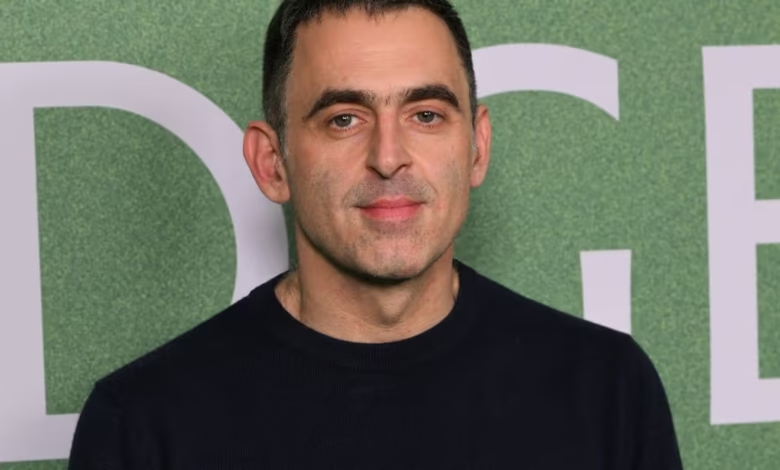
When people talk about greatness in snooker, one name rises above the rest—Ronnie O’Sullivan. He is not just a champion. He is a phenomenon. For over three decades, he has shaped, shaken, and redefined the sport. Fans call him “The Rocket,” and the nickname fits perfectly. His speed, precision, and natural flair make him one of the most electrifying athletes in cue sports history.
But Ronnie O’Sullivan is more than trophies and titles. He represents talent mixed with turbulence, genius blended with unpredictability. He fascinates audiences not only because he wins, but because he plays the game differently. He challenges traditions, questions authority, and speaks his mind openly. In a sport often known for calm manners and quiet professionalism, Ronnie brings raw emotion and bold honesty.
This article explores his journey—from a teenage prodigy to a seven-time world champion, from personal struggles to global stardom. We will examine his achievements, his playing style, his mental battles, and his lasting legacy. Whether you are a lifelong snooker fan or someone discovering the sport for the first time, Ronnie O’Sullivan’s story is impossible to ignore.
Early Life and The Birth of “The Rocket”
Ronnie O’Sullivan was born on December 5, 1975, in Wordsley, West Midlands, England. From a very young age, he displayed extraordinary hand-eye coordination. By the time most children were learning basic sports, Ronnie was already practicing on the snooker table. His natural ability stood out immediately.
He made his first century break at just 10 years old. By 15, he had achieved his first competitive maximum break (147). These milestones were not ordinary accomplishments. They signaled the arrival of a generational talent. Coaches and fans quickly realized that Ronnie O’Sullivan possessed something rare—effortless timing and instinctive shot selection.
At 17, he turned professional. Within months, he won the UK Championship in 1993, becoming the youngest-ever ranking event winner at that time. His aggressive speed and fearless potting earned him the nickname “The Rocket.” Unlike traditional players who carefully measured every move, Ronnie attacked the table with confidence and flow.
However, early fame brought pressure. His father faced imprisonment during Ronnie’s teenage years, which deeply affected him emotionally. Despite personal turmoil, Ronnie continued winning tournaments. His early career showed two things clearly: unmatched talent and emotional vulnerability.
Record-Breaking Achievements and Historic Milestones
Ronnie O’Sullivan’s achievements are not just impressive—they are historic. He has won seven World Snooker Championships, equaling the modern-era record set by Stephen Hendry. Each world title came across different eras, proving his longevity and adaptability.
He has also captured multiple UK Championships and Masters titles, making him one of the most decorated players in Triple Crown events. His consistency across decades is remarkable. While many champions dominate for a few years, Ronnie has remained competitive for over 30 years.
One of his most famous achievements came in 1997 at the World Championship, where he made the fastest 147 maximum break in just five minutes and eight seconds. That record still stands. It perfectly represents his style—fast, fearless, and precise.
In addition to his world titles, Ronnie holds the record for the most ranking titles in snooker history. He has also compiled more competitive century breaks than any other player. Numbers alone confirm his greatness, but statistics tell only part of the story. His true magic lies in how he wins.
Playing Style: Speed, Skill, and Natural Genius
Ronnie O’Sullivan’s playing style separates him from every other snooker player. He plays both right-handed and left-handed at a professional level. Most players struggle to switch hands under pressure, but Ronnie does it effortlessly, often choosing the opposite hand simply because he can.
His cue action is smooth and fluid. He does not appear tense or forced. Every shot looks natural. Observers often describe his talent as “God-given.” While practice plays a role, Ronnie’s timing and touch feel instinctive.
Speed is another defining feature. Many professional players take time between shots. Ronnie maintains rhythm. When he finds flow, frames can end in minutes. His quick decision-making pressures opponents psychologically. They struggle to adjust to his pace.
Yet his aggression is calculated. Ronnie understands angles and positional play deeply. He knows when to attack and when to defend. This combination of instinct and intelligence makes him nearly unstoppable at his best.
Mental Battles and Personal Struggles
Despite his success, Ronnie’s career has not been smooth. He has openly discussed battles with depression, anxiety, and addiction. Unlike many athletes who hide personal struggles, Ronnie has chosen honesty. His transparency has helped break stigma around mental health in sports.
There were periods when he stepped away from tournaments. At times, he criticized the sport’s administration and expressed frustration with media pressure. Some commentators labeled him controversial. Others saw him as refreshingly authentic.
His emotional intensity sometimes affected performance. He has withdrawn from events unexpectedly and admitted losing motivation. However, each comeback has demonstrated resilience. Ronnie repeatedly proves that mental strength evolves over time.
His journey reminds fans that greatness does not eliminate vulnerability. In fact, his openness makes his achievements more powerful. Winning championships while fighting internal battles adds depth to his legacy.
Rivalries That Defined an Era
Great athletes often rise through rivalry, and Ronnie O’Sullivan’s career includes several iconic battles. His early clashes with Stephen Hendry symbolized the shift between generations. Hendry represented dominance of the 1990s, while Ronnie embodied creative revolution.
Later, rivalries with players like John Higgins and Mark Williams shaped the modern era of snooker. These competitors, often called the “Class of ’92,” grew together and pushed each other to extraordinary levels. Their matches consistently delivered drama and high-quality snooker.
In recent years, younger talents such as Judd Trump and Neil Robertson have challenged Ronnie’s supremacy. Yet even against fresh competition, Ronnie remains competitive. His ability to defeat players half his age highlights his extraordinary longevity.
These rivalries elevated the sport’s popularity. Television audiences grew. Social media buzzed after classic matches. Ronnie’s presence guaranteed excitement.
Influence Beyond the Snooker Table
Ronnie O’Sullivan’s impact extends beyond titles. He attracts viewers who might not normally watch snooker. His charisma, honesty, and unpredictability create headlines. Sponsors value his star power.
He has written books, including autobiographies and fiction. Through writing, he shares insights into his mind, revealing the pressures of professional sport. Readers discover a thoughtful, introspective individual behind the confident competitor.
Ronnie has also worked as a pundit and commentator. His analysis is sharp and often blunt. He speaks with authority because he understands the game deeply. Younger players respect his experience, even when he critiques them.
His global appeal has helped expand snooker’s reach, particularly in China and other parts of Asia where the sport continues to grow rapidly.
Longevity and Reinvention in His 40s
Many athletes decline after their peak years. Ronnie O’Sullivan has done the opposite. In his 40s, he captured additional world titles and broke more records. His dedication to fitness and mental clarity improved over time.
He adjusted his training methods. Instead of relying solely on natural talent, he embraced structured practice and sports psychology. This evolution extended his career significantly.
His 2022 World Championship victory at age 46 proved that experience can outperform youth. He displayed calmness and strategic control, combining maturity with his trademark flair.
Longevity in snooker requires technical precision and mental stamina. Ronnie’s continued success reflects both.
Criticism, Controversy, and Confidence
Ronnie’s outspoken personality sometimes divides opinion. He has criticized tournament conditions, prize money structures, and governing bodies. Some see arrogance. Others see courage.
He does not conform to traditional expectations. He speaks honestly in interviews, sometimes expressing boredom or frustration. Critics argue this disrespects opponents. Supporters argue it humanizes elite sport.
Confidence defines champions. Ronnie’s self-belief fuels his performance. Even when struggling, he trusts his natural ability. That confidence intimidates opponents before matches begin.
Controversy, in many ways, strengthens his brand. People watch not only to see if he wins—but to see what he will say next.
Legacy: The Greatest of All Time?
The debate over the “Greatest of All Time” in snooker often centers on Ronnie O’Sullivan. Statistics favor him. Longevity supports him. Entertainment value elevates him.
Stephen Hendry dominated a shorter era with ruthless efficiency. Ronnie O’Sullivan dominated across multiple eras while evolving his style. That adaptability strengthens his claim.
Beyond numbers, Ronnie changed how people view snooker. He made it faster, more aggressive, and more emotionally open. Young players now embrace creativity rather than strict conservatism.
Whether every fan agrees or not, one fact stands clear: Ronnie O’Sullivan transformed snooker forever.
Conclusion:
Ronnie O’Sullivan represents more than sporting excellence. He symbolizes resilience, individuality, and artistic expression within competition. He reminds us that talent alone is not enough—mental strength and self-awareness matter equally.
His journey includes brilliance and breakdowns, triumphs and turbulence. Yet through everything, he continues competing at the highest level. Few athletes in any sport sustain such relevance for so long.
For new fans discovering snooker, Ronnie serves as the perfect introduction. For long-time followers, he remains the heartbeat of the game. As long as he holds a cue, arenas fill and audiences watch closely.
In the end, Ronnie O’Sullivan is not just “The Rocket.” He is a once-in-a-generation icon whose influence will echo long after he finally steps away from the table.