Married at First Sight: A Deep Dive Into TV’s Most Controversial Love Experiment

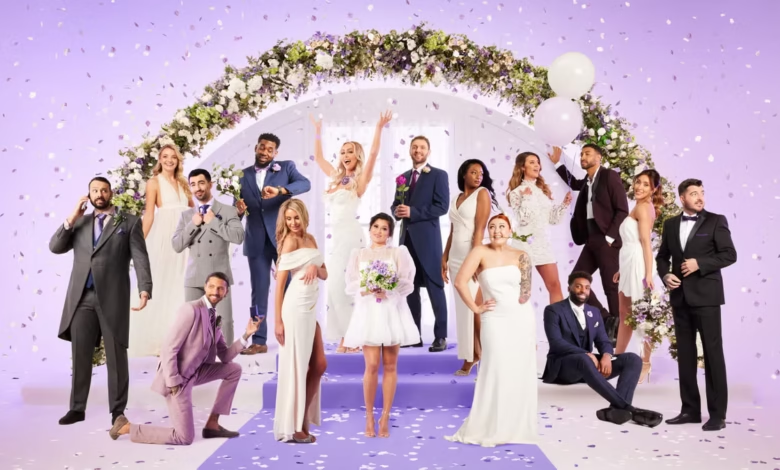
Introduction to Married at First Sight
Reality television has explored almost every corner of romance, but few shows have pushed boundaries like Married at First Sight. The concept is simple yet shocking: two strangers agree to marry each other the very first time they meet—at the altar. No dating phase. No prior conversations. Just a legally binding marriage based on expert matchmaking.
Over the years, this bold experiment has sparked intense debate. Some viewers call it reckless. Others praise it as refreshingly honest. But regardless of opinions, one thing is certain—Married at First Sight has become one of the most talked-about relationship experiments on television.
In this in-depth article, we’ll explore the origins, psychology, global impact, success rates, controversies, and lasting cultural influence of this groundbreaking series.
The Origins of Married at First Sight
The show first premiered in 2014 on the American network Lifetime. However, the original concept came from Denmark, Married at First Sight where the format debuted before expanding internationally. The American version quickly gained traction, turning into one of Lifetime’s most successful reality franchises.
From its first season, the show separated itself from typical dating programs. Instead of flashy competitions or exotic island villas, it focused on real-life marriages. Participants commit to eight weeks of married life before deciding whether to stay together or divorce.
The format is structured but emotionally raw. Couples meet, marry, honeymoon, move in together, and attend counseling sessions. Cameras document nearly every step, allowing viewers to witness authentic struggles and breakthroughs.
What truly sets the show apart is its claim of scientific matchmaking. Unlike dating shows that rely on attraction or drama, Married at First Sight emphasizes compatibility assessments, personality testing, and relationship counseling.
How the Matchmaking Process Works
At the heart of the show lies a panel of experts—Married at First Sight therapists, psychologists, and relationship specialists. In the U.S. version, one of the most recognized faces is Dr. Pepper Schwartz, who has played a key role in matchmaking since the beginning.
The process begins with thousands of applicants. Producers narrow the pool through interviews, background checks, psychological evaluations, and compatibility testing. Experts analyze core values, communication styles, long-term goals, and emotional readiness.
Once matches are selected, participants are informed that they have been paired—but they do not meet until the wedding day. This moment becomes one of the most intense scenes in reality TV. Married at First Sight Families gather. Guests sit in anticipation. The bride walks down the aisle. And two strangers lock eyes for the first time.
The show’s premise relies on trust—trust in the experts, in the process, and in the possibility that love can grow after commitment rather than before it.
The Psychology Behind Marrying a Stranger
The concept may sound extreme, but the psychology behind it isn’t entirely irrational. Research suggests that arranged marriages in certain cultures often result in long-lasting unions. Commitment, shared values, and gradual emotional development can sometimes outweigh instant chemistry.
Married at First Sight taps into this idea. Instead of asking, “Are you attracted?” it asks, “Can you build something lasting?” The experts believe that attraction can develop over time if foundational compatibility exists.
Participants are encouraged to approach the marriage with an open mind. They receive counseling sessions designed to help them navigate conflict and communicate effectively. These sessions provide viewers with surprisingly educational insights into healthy relationships.
Still, the psychological pressure is immense. Cameras amplify stress. Public scrutiny adds another layer. Couples must balance real emotions with the awareness that millions are watching their every move.
Success Rates: Does It Actually Work?
One of the biggest questions surrounding the show is simple: Does it work?
The answer is complicated. Over the seasons, several couples have remained married, built families, and shared life milestones together. Others have divorced before Decision Day—or even earlier.
Compared to traditional dating shows, Married at First Sight the success rate is arguably higher. However, when compared to general marriage statistics, it remains mixed. What makes the show compelling isn’t just the success stories, but the transparency of failure.
The public nature of the experiment creates accountability. Participants cannot quietly fade away; they must publicly choose to stay or leave. This honesty resonates with audiences who are tired of superficial romance narratives.
Ultimately, the show proves that compatibility alone is not enough. Effort, emotional maturity, and timing also play crucial roles.
International Versions and Global Popularity
The format’s success led to multiple international adaptations. One of the most popular versions airs in Australia under Nine Network. The Australian edition is known for higher drama, explosive dinner parties, and dramatic recoupling twists.
Other countries, including the UK, France, and Germany, have launched their own adaptations. Each version reflects cultural attitudes toward marriage and relationships. While the core concept remains consistent, execution varies widely.
In some countries, marriage laws prevent legal weddings, so couples commit symbolically rather than legally. In others, legal marriage is part of the agreement.
Global audiences continue to tune in because the emotional stakes feel real. Regardless of language or culture, the universal desire for love keeps viewers invested.
Criticism and Controversy
Despite its popularity, Married at First Sight faces significant criticism. Some argue that the show exploits participants’ vulnerability for ratings. Others question whether the expert matchmaking is truly scientific or influenced by production needs.
Critics also point to emotionally volatile pairings as evidence that drama sometimes outweighs compatibility. In certain seasons, mismatched personalities lead to intense conflict, raising concerns about participant well-being.
Mental health has become a growing topic of discussion in reality TV. Producers have reportedly increased psychological screening and support systems to protect participants before, during, and after filming.
Still, controversy often fuels viewership. Debates about ethics and authenticity keep the show relevant and constantly discussed on social media.
Why Audiences Keep Watching
So why does this show continue to thrive after so many seasons?
First, it offers something rare: vulnerability. Unlike dating shows built on glamour, Married at First Sight captures awkward silences, uncomfortable truths, and emotional breakdowns.
Second, viewers see pieces of their own relationships reflected on screen. Communication struggles, unmet expectations, and fear of rejection are universal experiences.
Third, the concept challenges modern dating culture. In an era dominated by swiping and short-term flings, the show promotes commitment first and attraction second.
Finally, the Decision Day format creates built-in suspense. Audiences invest weeks watching couples grow or unravel, only to reach a single defining moment: stay married or get divorced.
The Cultural Impact of Married at First Sight
Over time, the show has influenced conversations about love, marriage, and compatibility. It has challenged the idea that romantic chemistry must be instant. It has also questioned whether modern dating habits truly serve long-term happiness.
The show sparked countless podcasts, online discussions, and social media debates. Relationship experts analyze episodes publicly. Fans dissect every argument and body-language cue.
Even people who claim to dislike reality TV often admit they are curious about the experiment. That curiosity alone proves its cultural significance.
More importantly, it reintroduced a serious conversation about marriage into mainstream entertainment. Rather than glamorizing fantasy romance, it highlights the daily work required to sustain a partnership.
Lessons Viewers Can Learn
Beyond entertainment, the show offers practical insights:
- Communication is everything.
- Attraction can grow with emotional safety.
- Conflict is normal but must be handled respectfully.
- Shared values matter more than surface traits.
Even when couples fail, Married at First Sight viewers gain perspective on what not to do. The counseling sessions often feel like mini relationship masterclasses.
The show also demonstrates that commitment requires action. Love alone is not enough; consistent effort determines long-term success.
Conclusion:
Married at First Sight remains one of reality TV’s boldest social experiments. Some see it as reckless. Others view it as innovative. But no one can deny its impact.
The series challenges traditional courtship norms and asks a daring question: What if commitment came first?
While not every couple finds lasting love, the show proves that connection can develop in unexpected ways. It highlights both the beauty and complexity of marriage.
In a world saturated with dating apps and fleeting relationships, Married at First Sight dares to slow things down. It reminds us that love is not always instant—but with the right foundation, it can grow.
And perhaps that is why millions continue to watch.