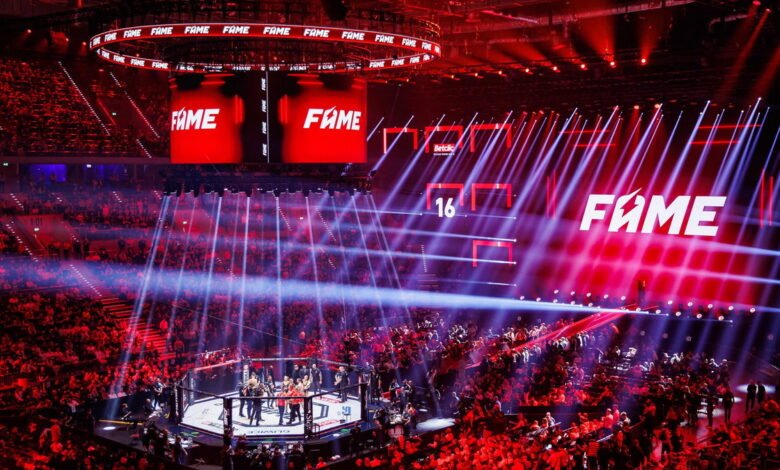
Introduction to Fame MMA
Fame MMA did not emerge from traditional combat sports culture. Instead, it was born at the intersection of internet celebrity, influencer culture, and mainstream mixed martial arts. Founded in Poland in 2018, Fame MMA quickly carved out a unique niche by organizing fights between social media personalities, YouTubers, rappers, and public figures rather than career fighters. What initially seemed like a novelty concept soon transformed into a commercially powerful combat sports brand.
The idea behind Fame MMA was simple yet bold: take individuals who already command massive online audiences and put them inside a professional MMA environment. The combination of personal rivalries, social media drama, and real physical confrontation proved irresistible to younger viewers. Unlike traditional MMA promotions that build fighters over years, Fame MMA leveraged existing fame and digital followings to generate instant buzz.
In its early events, many skeptics dismissed Fame MMA as a publicity stunt. Critics argued that celebrity fighters would lack discipline, skill, and seriousness. However, the promotion invested heavily in professional production, experienced referees, and structured training camps. Over time, it became clear that while the fighters were celebrities first, the competition itself was real and often surprisingly intense.
Today, Fame MMA stands as one of Europe’s most recognized celebrity fight promotions. Its success demonstrates how modern combat sports can evolve alongside digital media trends. What started as a cultural experiment has grown into a profitable and influential organization that continues to redefine entertainment-based fighting.
How Fame MMA Differs from Traditional MMA Promotions
To understand Fame MMA’s appeal, it is essential to compare it with traditional promotions such as Ultimate Fighting Championship and Bellator MMA. While those organizations focus on elite professional fighters who dedicate their lives to the sport, Fame MMA centers around personalities who are already famous for other reasons.
Traditional MMA promotions emphasize rankings, championship belts, and long-term career development. Fighters climb through divisions, earning opportunities based on merit and performance. Fame MMA, on the other hand, thrives on storytelling, rivalry, and entertainment value. Matchmaking often revolves around online disputes, controversial statements, or existing fan interest rather than competitive rankings.
Another key difference lies in audience demographics. Traditional MMA audiences include hardcore fight fans who appreciate technical grappling exchanges and tactical striking. Fame MMA’s audience is generally younger and more digitally engaged. Many viewers tune in because they already follow one or both competitors on social media platforms.
Despite these differences, Fame MMA has adopted many professional elements from established organizations. Events feature weigh-ins, press conferences, face-offs, and high-quality live production. This hybrid model—combining professional structure with influencer culture—has allowed Fame MMA to operate successfully without directly competing with elite promotions on pure athletic prestige.
The Role of Influencer Culture in Fame MMA’s Popularity
Influencer culture plays a central role in Fame MMA’s explosive growth. Social media personalities bring built-in fan bases that guarantee attention long before a fight even takes place. A single Instagram post, YouTube vlog, or TikTok video can generate millions of impressions, creating hype organically.
Unlike traditional marketing campaigns, Fame MMA events are often promoted through personal channels of the fighters themselves. This decentralized promotion strategy reduces advertising costs while maximizing reach. When two influencers announce a fight, their followers become emotionally invested, choosing sides and fueling online debates.
The psychological aspect is particularly important. Fans feel connected to influencers in a way they rarely do with professional athletes. They have watched their favorite creators for years, seen their personal struggles, and followed their daily lives. When those creators step into a cage, the emotional stakes feel personal.
This model reflects a broader shift in entertainment consumption. Audiences today value authenticity, personality, and drama as much as athletic skill. Fame MMA capitalizes on this shift by presenting fights as both sporting events and narrative-driven spectacles.
Training, Preparation, and Legitimacy Concerns
One of the most frequent criticisms of Fame MMA is the perceived lack of professionalism among celebrity fighters. However, this perception does not fully reflect reality. Many participants undergo months of rigorous training in established MMA gyms, working with experienced coaches in striking, grappling, and conditioning.
Training camps often mirror those of professional fighters, albeit within shorter timeframes. Celebrities quickly learn that stepping into a cage unprepared can lead to serious consequences. As a result, many invest significant effort in improving their physical conditioning and technical skills.
There have been instances where Fame MMA bouts delivered surprisingly technical performances. Some participants discovered genuine passion for combat sports and continued training long after their initial appearances. While not every fight reaches elite-level quality, the commitment level has steadily increased over the years.
Legitimacy also comes from regulation. Events are organized under proper athletic oversight, including medical examinations and official referees. This structure helps ensure fighter safety and enhances credibility within the broader combat sports community.
Business Model and Revenue Streams
Fame MMA operates on a highly modern business model. Pay-per-view sales form a major portion of its revenue, with events often attracting substantial online purchases. The digital-savvy audience is comfortable with streaming platforms, making PPV an ideal format.
Sponsorships represent another significant income stream. Brands eager to reach younger consumers see Fame MMA as an effective marketing vehicle. Influencer fighters often integrate sponsorship content into their own platforms, further increasing visibility for partners.
Merchandising also plays a role. Personalized merchandise tied to specific fighters or rivalries generates additional revenue. Limited-edition drops around major events create urgency and excitement among fans.
In many ways, Fame MMA’s business strategy mirrors that of influencer-driven startups rather than traditional sports organizations. It emphasizes direct-to-consumer sales, digital engagement, and social media amplification.
Controversies and Public Criticism
Like many unconventional entertainment ventures, Fame MMA has faced its share of controversy. Critics argue that celebrity fighting trivializes a sport built on discipline and respect. Some professional fighters view influencer bouts as distractions from legitimate competition.
There have also been debates about safety, especially when inexperienced participants enter high-intensity matches. However, organizers have responded by implementing stricter medical screenings and weight regulations.
Publicity stunts and heated press conferences sometimes blur the line between genuine rivalry and scripted drama. While this approach drives viewership, it can attract criticism for prioritizing spectacle over sportsmanship.
Nevertheless, controversy often fuels popularity. In the digital era, attention—whether positive or negative—translates into engagement. Fame MMA has learned to navigate criticism while maintaining its core identity.
The Global Influence of Celebrity Boxing and MMA
Fame MMA is part of a broader global trend that includes influencer boxing events featuring figures like Logan Paul and KSI. These crossover fights have demonstrated that audiences are willing to pay for personality-driven combat sports.
The success of these events has encouraged similar promotions in different countries. While Fame MMA originated in Poland, its model has inspired adaptations elsewhere in Europe and beyond.
The blending of celebrity culture with combat sports signals a transformation in how audiences consume live entertainment. Traditional gatekeepers no longer control who becomes a headline fighter. Instead, digital influence can open doors to high-profile matchups.
This global shift suggests that Fame MMA is not an isolated phenomenon but part of a larger movement reshaping the fight industry.
The Future of Fame MMA
Looking ahead, Fame MMA faces both opportunities and challenges. As the novelty factor decreases, maintaining audience interest will require innovation. The promotion may expand internationally, sign higher-profile celebrities, or introduce new rule formats.
Another possibility is the gradual integration of more skilled fighters who began as influencers but developed genuine MMA abilities. This hybrid category could blur the line between celebrity entertainment and legitimate competition.
Technology will likely play an even greater role. Interactive live streams, augmented reality features, and enhanced fan engagement tools could redefine the viewing experience.
Ultimately, Fame MMA’s future depends on its ability to balance spectacle with credibility. If it continues adapting to audience expectations while maintaining safety and professionalism, it may remain a dominant force in the celebrity combat sports arena.
Conclusion:
Fame MMA represents a fascinating evolution in modern sports entertainment. It challenges traditional notions of what qualifies as a “real” fighter while proving that audience engagement often matters as much as athletic pedigree.
By combining influencer culture, professional event production, and genuine physical competition, Fame MMA has created a sustainable and highly profitable model. Whether admired or criticized, it undeniably reflects the realities of the digital age.
As combat sports continue evolving, Fame MMA stands as a case study in adaptation. It shows that in today’s media landscape, fame itself can become a gateway into the cage—and sometimes, into lasting impact within the fight world.