Koenigsegg Jesko Absolut Top Speed: Engineering the World’s Fastest Production Car

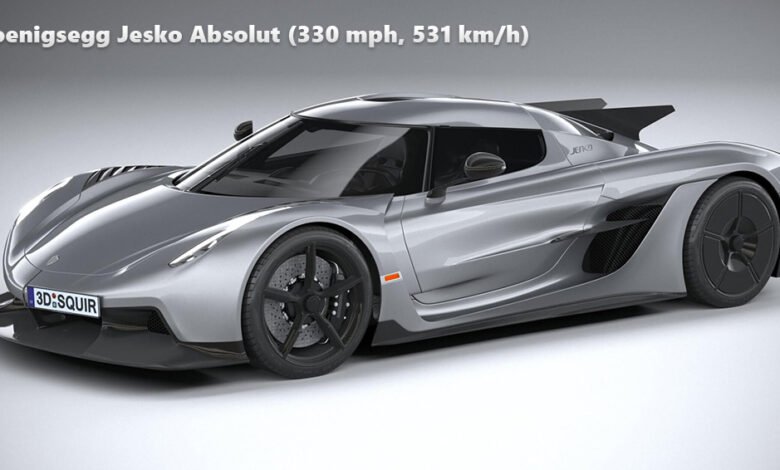
Introduction to koenigsegg jesko absolut top speed
When people talk about the Koenigsegg Jesko Absolut top speed, they are not just discussing a number on a speedometer. They are talking about a philosophy, an engineering revolution, and a bold statement from a small Swedish manufacturer that refuses to follow conventional limits. In a world where hypercar makers constantly compete for performance supremacy, the Jesko Absolut stands out because it was designed with one singular purpose: to be the fastest Koenigsegg ever made.
Koenigsegg is not a mass-production automaker. It is a boutique manufacturer led by Christian von Koenigsegg, a visionary who has built his brand around innovation, lightweight engineering, and mechanical artistry. The Jesko Absolut is the ultimate expression of that vision. Unlike its sibling, the Jesko Attack, which focuses on track performance and downforce, the Absolut strips away excess drag in pursuit of extreme top-end velocity.
The fascination with top speed may seem like an old-school obsession, but it remains one of the purest forms of automotive achievement. Reaching astronomical speeds requires an unmatched balance of power, aerodynamics, stability, and precision engineering. The Koenigsegg Jesko Absolut top speed claim is not just ambitious—it aims to rewrite what we believe is possible for a road-legal production car.
In this article, we will explore what makes the Jesko Absolut capable of extraordinary speed, how its engineering supports those claims, how it compares to competitors, and why it may represent the peak of internal combustion performance before the electric era fully takes over.
The Engineering Behind the Koenigsegg Jesko Absolut Top Speed
At the heart of the koenigsegg jesko absolut top speed is a 5.0-liter twin-turbocharged V8 engine that redefines what internal combustion can achieve. This powerplant produces up to 1,600 horsepower when running on E85 fuel, and even on regular gasoline, it delivers a staggering 1,280 horsepower. These numbers alone place the Jesko among the most powerful production cars ever built.
However, horsepower alone does not determine top speed. What truly matters is how efficiently that power can push the car through air resistance. As speeds increase, aerodynamic drag becomes the greatest enemy. Koenigsegg addressed this by redesigning the body specifically for low drag. The Jesko Absolut features an incredibly low drag coefficient, reportedly around 0.278 Cd, which is astonishing for a hypercar.
The removal of the large rear wing found on the Jesko Attack is a key factor. Instead, the Absolut uses extended rear bodywork and stabilizing fins to maintain high-speed stability without creating excessive drag. Every surface has been sculpted to reduce turbulence and optimize airflow. Even the smallest details, such as wheel design and underbody smoothing, play a critical role.
The transmission is another groundbreaking element. koenigsegg jesko absolut top speed’s proprietary 9-speed Light Speed Transmission (LST) allows near-instant gear changes without a traditional flywheel. This multi-clutch system enables seamless power delivery, ensuring that acceleration remains relentless even as the car approaches its upper speed limits. When discussing the Koenigsegg Jesko Absolut top speed, this transmission is just as important as the engine itself.
What Is the Claimed Koenigsegg Jesko Absolut Top Speed?
Koenigsegg has made bold claims regarding the Jesko Absolut top speed. According to the company, the car is theoretically capable of exceeding 300 mph (approximately 483 km/h), potentially reaching speeds as high as 330 mph under ideal conditions. If validated, this would make it the fastest production car ever built.
It is important to note that as of now, the Jesko Absolut has not officially completed a verified 300+ mph run. However, Koenigsegg is known for carefully calculating performance capabilities through advanced simulations and real-world testing data. The company has stated that the car’s gearing, power output, and aerodynamic profile are specifically optimized for such speeds.
Achieving 300 mph is not just about raw capability. It requires the right tires, a suitable testing location, and perfect environmental conditions. Tire technology, in particular, becomes a limiting factor at such extreme velocities. Even the best high-performance tires must withstand enormous centrifugal forces and heat buildup.
Despite these challenges, the Koenigsegg Jesko Absolut top speed remains one of the most credible 300+ mph claims in the hypercar world. Unlike exaggerated marketing figures, Koenigsegg has a track record of delivering on its promises, including setting multiple world records with previous models like the Agera RS.
Aerodynamics: The Secret Weapon of the Jesko Absolut
If you look at the Jesko Absolut, you will immediately notice its sleek, elongated shape. This is not merely for aesthetic appeal. Aerodynamics is the single most important factor in achieving extreme top speed. koenigsegg jesko absolut top speed At 300 mph, air resistance is exponentially greater than at 200 mph, and overcoming it requires meticulous design.
The Absolut’s rear end is extended compared to the Jesko Attack. This long-tail configuration reduces airflow separation and minimizes drag. Additionally, koenigsegg jesko absolut top speed removed high-downforce components such as the massive rear wing to prevent unnecessary aerodynamic resistance. The result is a hypercar that slices through the air with minimal disruption.
Underbody airflow management is equally important. The Jesko Absolut features a smooth, optimized undertray that reduces turbulence beneath the vehicle. Diffusers and subtle aerodynamic fins help maintain stability without generating excessive drag. Stability at high speeds is critical, as even minor aerodynamic imbalances can lead to catastrophic consequences.
Koenigsegg engineers also paid attention to cooling efficiency. Managing airflow to radiators and intercoolers while maintaining low drag is an enormous challenge. The Jesko Absolut balances these needs beautifully, ensuring that the engine remains cool even during sustained high-speed runs.
Power-to-Weight Ratio and Chassis Design
The Koenigsegg Jesko Absolut is built around a carbon fiber monocoque chassis that is both incredibly strong and exceptionally lightweight. Keeping weight down is essential for both acceleration and stability. The lighter the car, the less strain on components at high speed.
The chassis is not only lightweight but also extremely rigid. koenigsegg jesko absolut top speed High torsional rigidity ensures that the car remains stable and predictable, even when traveling at velocities that most vehicles will never experience. This structural integrity plays a significant role in maintaining control during high-speed acceleration.
Suspension geometry has been fine-tuned to support extreme speed runs. The Triplex rear suspension system enhances stability by minimizing squat under acceleration. This keeps the car balanced and maximizes traction, which is crucial when deploying over 1,500 horsepower.
Braking performance is equally impressive. koenigsegg jesko absolut top speed Although top speed often gets the headlines, safely decelerating from such speeds is just as important. Massive carbon-ceramic brakes provide the stopping power required to bring the Jesko Absolut back to sane velocities.
How the Jesko Absolut Compares to Other Hypercars
The Koenigsegg Jesko Absolut top speed claim places it in direct competition with other high-speed legends such as the Bugatti Chiron Super Sport 300+ and the SSC Tuatara. Each of these cars represents the pinnacle of internal combustion performance.
Bugatti famously broke the 300 mph barrier with a modified Chiron, reaching 304 mph in a controlled environment. However, that version was not a standard production car. Koenigsegg’s goal is to achieve similar or greater performance within production specifications.
SSC also claimed record-breaking speeds with the Tuatara, though those claims were met with controversy and later re-tested. In contrast, koenigsegg jesko absolut top speed has maintained a reputation for transparency and technical credibility, which strengthens confidence in the Jesko Absolut’s potential.
What sets Koenigsegg apart is its innovative engineering approach. From the Light Speed Transmission to camless Freevalve technology used in other models, the company consistently challenges traditional automotive design. The Jesko Absolut embodies this spirit, pushing boundaries rather than following established formulas.
The Future of Top Speed and the Legacy of the Jesko Absolut
The automotive industry is rapidly transitioning toward electrification. While electric hypercars offer mind-blowing acceleration, achieving extreme top speed remains a unique challenge due to battery limitations and heat management. The Jesko Absolut may represent one of the final great internal combustion speed icons.
There is something emotionally compelling about a twin-turbo V8 roaring its way past 300 mph. It is a mechanical symphony powered by fuel, air, and fire. As regulations tighten and sustainability becomes a global priority, cars like the Jesko Absolut may become increasingly rare.
The legacy of the Koenigsegg Jesko Absolut top speed will not only be defined by a number. It will be defined by what it represents: human ambition, engineering excellence, and the relentless pursuit of pushing limits. Even if it never officially records a 330 mph run, the fact that it was designed to do so is remarkable.
In the end, the Jesko Absolut is more than just a hypercar. It is a testament to what is possible when innovation meets courage. Whether it ultimately claims the world speed record or not, it has already secured its place in automotive history as one of the most extraordinary machines ever created.